
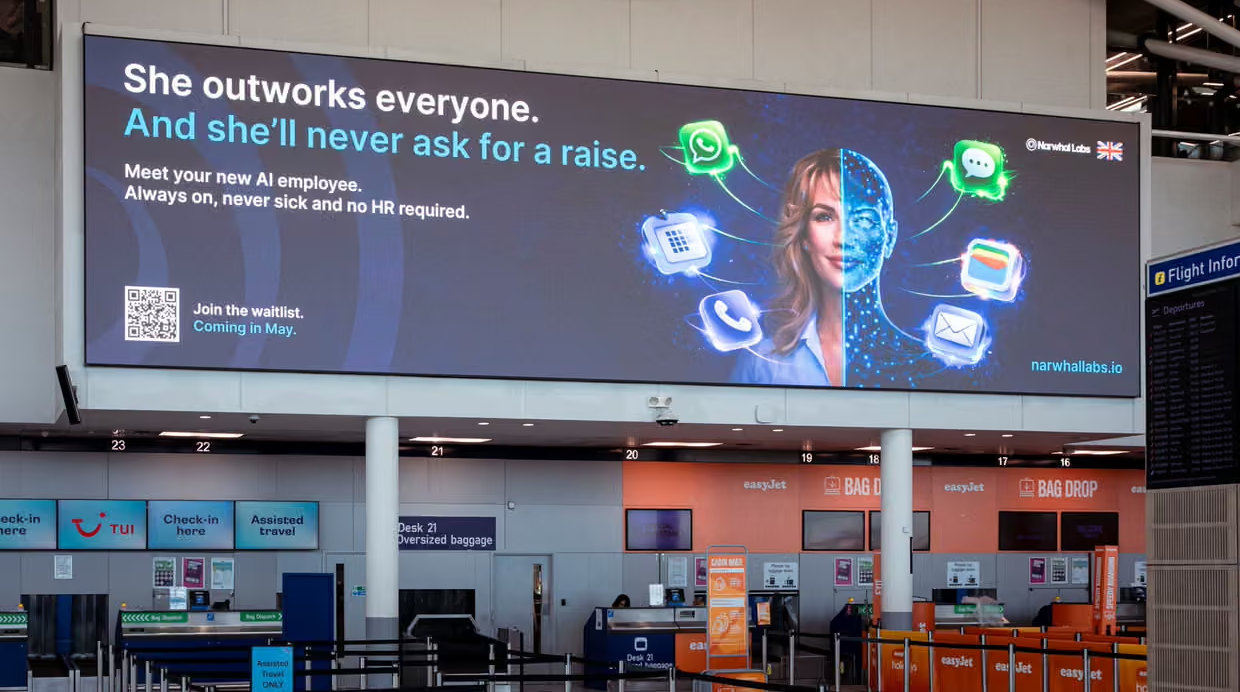
AI won’t replace your Assistant – but it shows why you need one
We’re sure you’ve heard that AI is going to save you time and money. Once you’ve got the hang of your chosen LLM Assistant you’ll gain more hours in the day, replace your admin team, streamline your operations and generally do anything a human can do, but even quicker/easier/better – and ChatGPT “never asks for a pay rise”.
And whilst some of that is true, it isn’t the full story. And actually, a different story is emerging. Amongst headlines about Mythos and the potential destruction of civilisation as we know, a report was released suggesting that up to 95% of AI pilots fail to deliver measurable ROI. Not because the tech isn’t up to it, but because the way these tools are being introduced into businesses isn’t working.
Upsource’s experience with tech and tools backs this up – it’s rarely the tool itself that’s the issue, it’s everything around it.
AI isn’t a quick fix
What we’re seeing more and more, both across the industry and in conversations with clients, is a kind of rushed adoption.
Tools trend, so businesses pick them up. Not because they’re solving a clearly defined problem, but because of the hype (we’ve been there!). They sit slightly awkwardly alongside existing workflows, rather than being properly embedded into them. And often, no one really owns them or tests them. They’re there, being used inconsistently, with very little oversight.
It’s not dissimilar to what happens when Virtual Assistant support is brought into a business without the right foundations in place. When there’s no real onboarding, no shared context, no agreement on what “good” looks like, things can start to slip. Not because the Assistant isn’t capable, but because they haven’t been set up to succeed.
AI is no different. It still needs direction. It still needs structure. It still needs someone paying attention. It needs significant training and investment.
And despite how many conversations you’ve had, we’ve had, the world is having about AI, very few businesses are actually getting this right. Only around 1 in 10 organisations have successfully scaled AI across their operations.
The time-saving myth
Something we’ve noticed, is where the time you’re supposed to be saving with AI actually goes.
Instead of doing a task from scratch, you need to guide, refine and correct AI’s work. You’re providing context, sense-checking, fact checking and changing the tone. So are you really saving time?
Without that human intervention, AI’s output can become inconsistent, inaccurate and let’s face it, clearly written by a robot. It can absolutely make you more efficient, but only when a real life human being is there to oversee it.
Where your Assistant comes in (and why our role is changing)
AI gets a lot of hype about replacing humans, especially Assistants. But we think AI is actually making it clear what great support looks like – and it looks like a person.
The value of a great Assistant has never been “just” completing tasks, it’s in our judgement, our understanding of context and nuance and reading the room (to name merely a few). Perhaps most importantly in this context, it’s in understanding systems, how parts of the business connect and how and where the right tool can support that.
Assistants are naturally stepping into operations and tech champions, shaping workflows, owning systems and making sure that any tools, not just AI, are running as they should.
The contradiction
Obviously there’s huge interest and take up of AI. Clients are willing to invest time and money into new tools, there’s a huge appetite for experimentation. But we’re still seeing a bit of hesitation when it comes to investing in the human support that is so necessary to complement AI.
Both require the same conditions to work well. Assistants and AI both need the same kind of clarity, training, support and dialogue to give you the results you’re hoping for.
But when you’re putting the time, energy and investment in, the combination of Assistant and AI can be really successful. An Assistant can shape the way you and your business uses AI, improve the outputs and most importantly reduce the risk.
What’s working
Looking at our clients that are getting real returns from their AI, they aren’t rolling it out everywhere all at once.
Start with a specific problem, solve it, learn from it and then think about how your tool can fit into your operations, your systems and be truly integrated.
And make sure someone, a human being, owns it. Someone who understands the context, the way the business really works, not just the way it works on paper and can train your AI.
What Upsource is building
We’re seeing a growing need for support that truly incorporates AI. That can help you choose the right tools for the right tasks and make sure they are being implemented to get the best out of them..
Upsource is sitting on a huge amount of tech and AI knowledge and skills within the team. Skills that are already being used in pockets, but not always fully brought to bear.
We’re thinking more intentionally about how we create space for AI and Assistant collaboration. How to utilise it better and how we support both our team and our clients in getting more from it. More on this soon.
Your opportunity
AI is the panacea the hype is leading us to believe. It’s not replacing your admin and operations support, it’s highlighting how essential the right support is.
The businesses that will benefit most from AI won’t be the ones using the most tools. They’ll be the ones with the right people in place to make the right tools work well.
If you want more support in implementing AI in your business, speak to your Virtual Assistant, or contact Caroline and we can help.
Leave a Reply